Anansi's Web of Tricks
Overview
Anansi's Web of Tricks is a strategic card game that brings West African folklore to life through interactive systems. Players embody characters from Anansi stories, using wit, strategy, and storytelling to navigate challenges and outsmart opponents. The project explores how cultural narratives can be preserved and reimagined through game mechanics, and serves as a case study in designing cultural systems with intention and respect.
Why This Project Exists
Growing up with Anansi stories in Ghana, West Africa, I noticed a gap: while Western mythology has been extensively adapted into games (think Greek myths in Age of Mythology, Norse tales in God of War), West African folklore remains underrepresented in interactive media.
I wanted to create something that:
- Honors the source material: Anansi stories aren't just entertainment—they're moral philosophy, cultural memory, and survival strategies encoded in narrative
- Translates storytelling into systems: How do you capture the essence of a trickster narrative in game mechanics?
- Creates space for learning: Players should come away understanding something about West African culture, not just having fun
This project is also deeply personal. It' s my way of connecting with heritage, exploring identity through design, and demonstrating that cultural preservation can happen through thoughtful, contemporary media.

Rules of Engagement
The goal is simple: be the first to discard all your cards. But in Anansi's world, nothing is straightforward. Key mechanics include:
Mischief Cards
- Steal: Take a card from a rival; they draw two.
- Vortex Shuffle: Redistribute hands among three players to chaotic effect.
- Forced Draw: Make a player draw 3. If they counter, you draw 2.
Character Abilities
- Anansi: Swap a card with anyone.
- Tiko (Tortoise): Block a mischief card.
- Kolo (Monkey): Skip your turn to force a rival to draw.
Current Iteration: Physical Card Game
Game Mechanics
The game centers around strategic resource management and narrative-driven decision-making:
Character Cards
Players are given characters from Anansi folklore at random, each with unique abilities that reflect their narrative role (the silent leopard, the strong elephant, the crafty spider).
Trick, Trap, & Action Cards
Players deploy strategies inspired by classic Anansi tales—deception, collaboration, cleverness—to overcome challenges or outmaneuver opponents.
Mischief Cards
Disruptive cards that shake up the game state. Steal hands, force draws, or create chaos to keep opponents on their toes.
Web of Consequences
Actions have ripple effects—helping one player might empower them later; hoarding resources might isolate you. The game mirrors the interconnected nature of Anansi's world.
Playtesting & Iteration
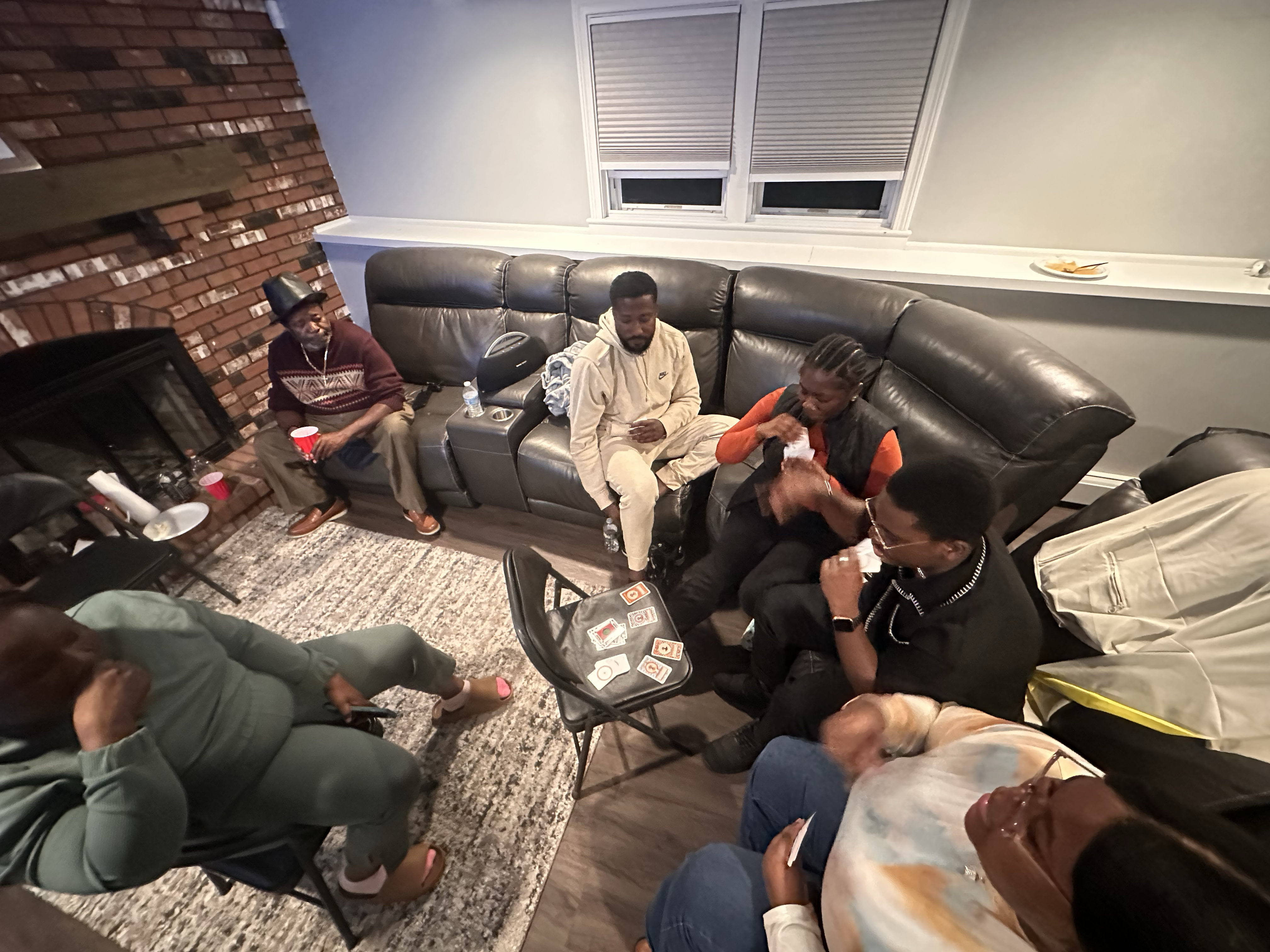
I've conducted 12 playtesting sessions with groups ranging from family members (who grew up with these stories) to friends unfamiliar with the folklore. Key learnings:
- Players enjoyed the strategic depth but wanted more narrative context for each card
- Visual design needed to balance cultural authenticity with gameplay clarity
- The "moral choice" mechanic resonated most when consequences felt meaningful, not punitive
Future Roadmap
This project is designed to evolve across three platforms, each exploring different aspects of interactive systems:
Phase 1: Physical Card Game (Current)
Status: This game started as a physical card game and is currently in active playtesting.
Goals:
- Finalize core mechanics and balance
- Complete visual design system for cards
- Document game rules and cultural context
- Consider small-scale production (100-200 decks) for community distribution
What it demonstrates: Systems thinking, narrative design, cultural research, iterative prototyping
Phase 2: Web-Based Companion (Next)
Concept: A digital companion app that enhances the physical game experience
Features:
- Interactive rulebook with animated examples
- Cultural context for each card (folklore origins, moral lessons)
- Score tracking and game history
- Community features: share strategies, house rules, custom scenarios
What it demonstrates: Information architecture, educational UX, cross-platform thinking
Phase 3: Full Digital Adaptation (Future)
Vision: Future iterations will include a fully functional web version and a native app.
Potential Features:
- Single-player story mode with branching narratives
- Online multiplayer with matchmaking
- Animated card effects that bring stories to life
- Accessibility features: screen reader support, colorblind-friendly design, simplified UI modes
- Educational mode for schools and cultural centers
What it demonstrates: Full-stack product thinking, accessibility-first design, scalable systems
What This Demonstrates as a Designer
This ongoing project showcases several key aspects of my design practice:
Long-term Vision & Ownership
I'm not looking for quick wins. I'm building something meant to last, to evolve, and to serve a community. This demonstrates patience, commitment, and strategic thinking across timescales.
Cultural Sensitivity & Research Rigor
Every design decision is informed by research into Akan folklore, consultations with elders and storytellers, and a deep respect for the source material. This isn't cultural tourism—it's cultural stewardship.
Systems Thinking in Practice
Designing a game is designing a system: How do rules create behavior? How do mechanics encode values? How does emergence create meaningful stories? These questions apply to all interactive design.
Iteration & Humility
I've thrown away entire versions of this game. I've been wrong about mechanics I was sure would work. I've learned that good design requires killing your darlings and listening to your users—even when it's hard.